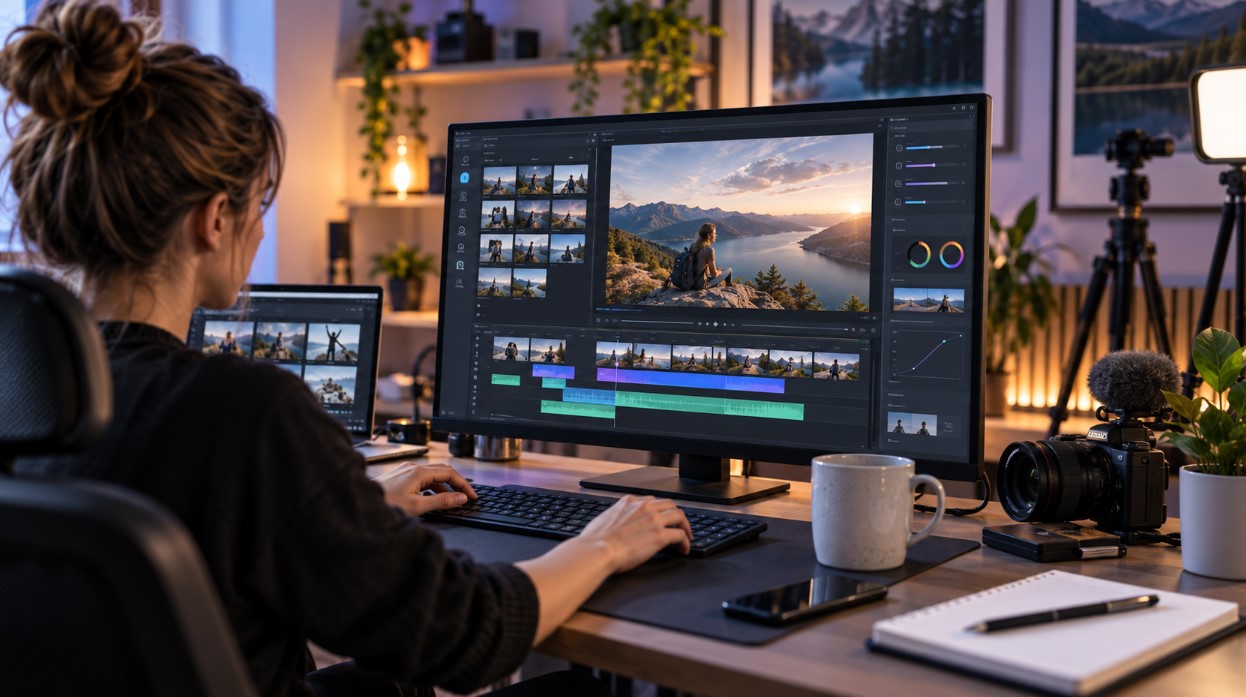
Video’s basically taken over as the internet’s default language at this point. Short-form social clips, full-blown YouTube productions, whatever, audiences expect polished, engaging visuals at a pace traditional editing just wasn’t built to keep up with. That’s exactly why AI went from novelty to core production tool so fast.
Stuff that used to eat hours, cutting, trimming, color correction, now gets knocked out in minutes with machine learning doing the heavy lifting. And it’s not just changing how videos get made. It’s changing who gets to make them at all.
The Rise of AI-Assisted Editing
For years, editing was one of those skills locked behind mastering genuinely complicated software. Steep learning curve, serious hardware demands, a real time investment before you got anywhere. AI’s been quietly knocking those barriers down. Automatic scene detection, smart cropping, noise reduction, speech-to-text, pretty standard stuff in a lot of editing platforms now. All of it just handles the repetitive grunt work so creators can actually focus on storytelling and the decisions that matter.
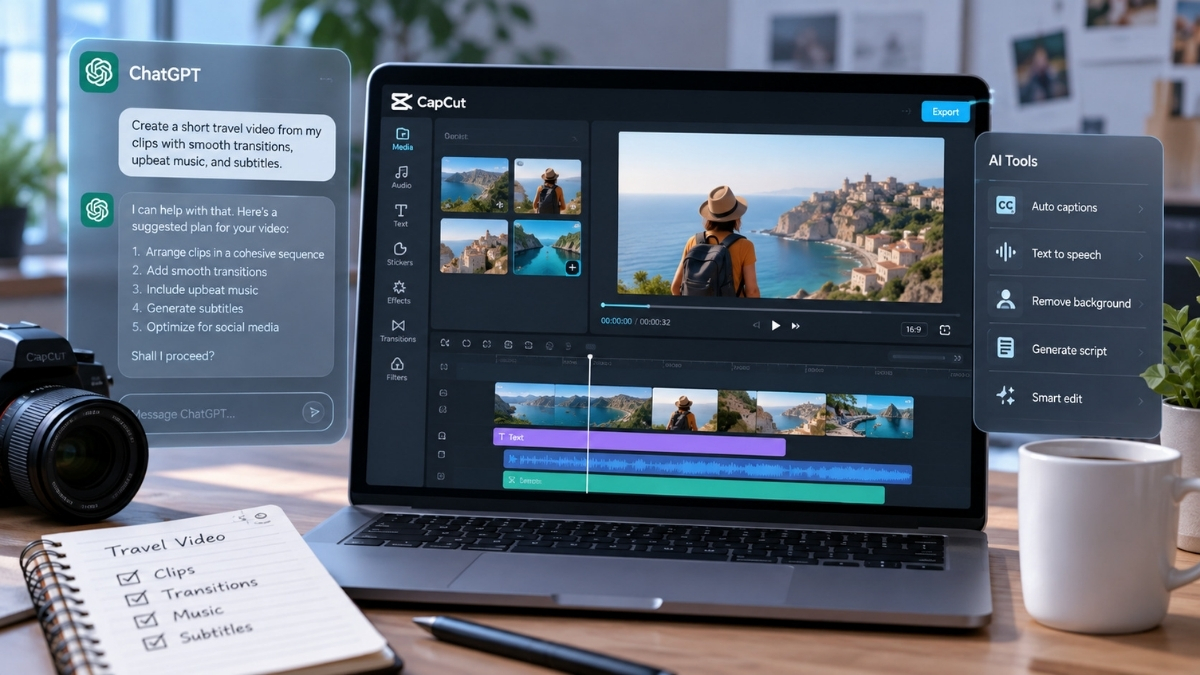
One of the bigger shifts, honestly, is conversational AI getting baked straight into editing software. Instead of hunting through a dozen menus, editors can just say what they want in plain language and let the system handle it. An AI image generator is a solid example – natural language prompts steering cuts, transitions, even stylistic choices. The whole thing starts feeling less like operating a machine and more like working alongside an assistant.
What AI Can Do Today
This current wave of AI editing tools covers a lot of ground, genuinely. Automatic captioning can transcribe speech across multiple languages and sync it to the timeline with pretty impressive accuracy. Background removal, used to be a tedious masking job, now happens in real time, no sweat. AI can also comb through footage on its own and flag the most engaging moments, suggesting highlights for trailers or social teasers without you scrubbing through everything yourself.
Audio’s another spot where AI genuinely pulls its weight. It can isolate voices from background noise, balance levels automatically, and even spit out realistic voiceovers. For anyone working solo, that basically replaces needing a dedicated sound engineer. Color grading works the same way, matching the look across different clips so everything feels visually consistent, without hours of manual tweaking to get there.
Benefits for Independent Creators
Independent creators and small teams get the most out of all this, honestly, by a mile. No budget for a full editing staff? Software just multiplies what you can pull off solo instead. AI shrinks the gap between shooting something and actually publishing it, which matters a lot when trends move as fast as they do. Faster turnaround means more content out the door, and more content means more eyeballs finding you.
It also lowers the barrier to just getting started. A lot of platforms offer free or cheap tiers with AI features already built in, letting beginners put out genuinely professional-looking videos on whatever device they’ve got sitting around. That kind of democratization’s led to a real surge in diverse voices and niche content that honestly might never have found an audience a few years back.
Limitations and Human Oversight
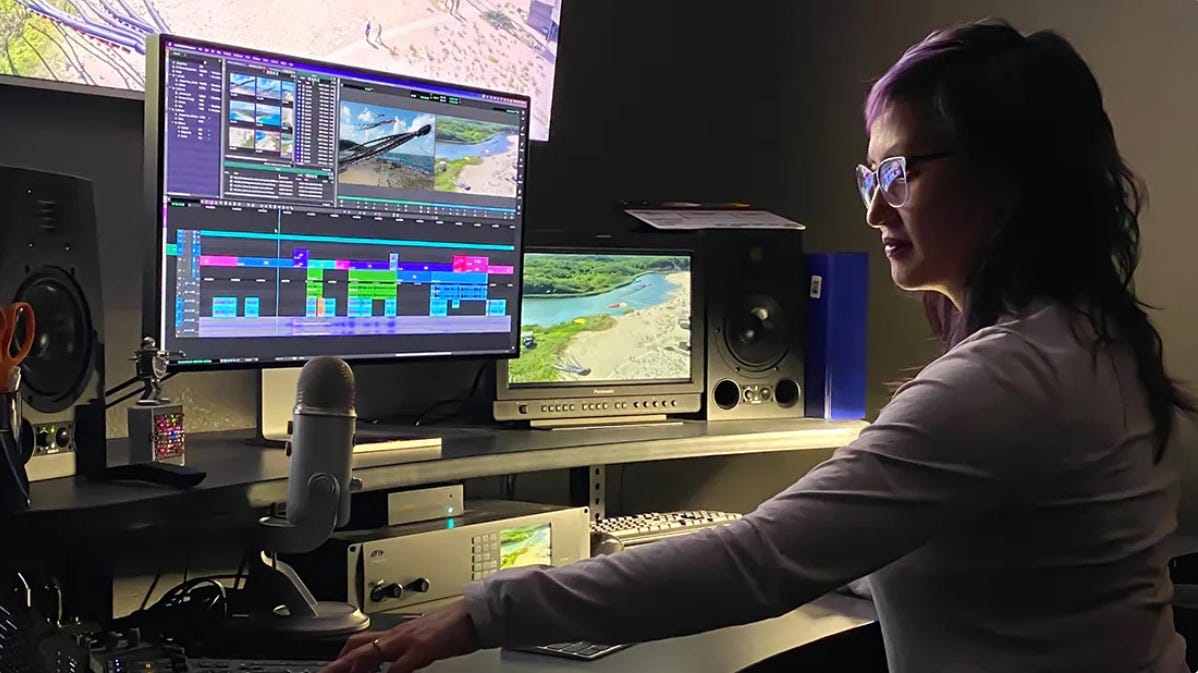
For everything it can do, though, AI’s not a replacement for actual human judgment. Algorithms misread context, cut at awkward moments, or slap on filters that clash with whatever the creator’s actually going for. You get the best results treating AI like a collaborator, not handing it the director’s chair. Creators still need to review, refine, and add the personal touches that make a video genuinely land with people.
There’s real ethical stuff to think about here too, deepfakes, voice cloning, automated misinformation aren’t hypotheticals anymore. Using these tools responsibly means staying transparent with your audience and actually respecting copyright and privacy. Platforms keep building in more safeguards, sure, but at the end of the day, the responsibility’s still on the creator.
The Future of Video Editing
Looking ahead, AI’s probably going to keep working its way into every stage of production. Think tools that build storyboards straight from a script, suggest music based on emotional tone, automatically reshape videos for different platforms and aspect ratios. Real-time collaboration between humans and AI could easily become the default, editors and algorithms just working side by side instead of one eventually replacing the other.
For anyone getting into the field now, knowing your way around AI editing tools is becoming about as essential as knowing how to run a camera. This isn’t just a shortcut, either, it’s genuinely a new creative medium in its own right. The people who actually learn to harness it are going to be telling stories faster, cheaper, and with more creative freedom than anyone had before.
Conclusion
AI’s reshaping editing from a technical chore into something a lot more intuitive and creative, plain and simple. It lets individuals and small teams go toe-to-toe with bigger studios, and it’s cracked open real storytelling possibilities that just weren’t there before.
Human oversight’s still non-negotiable, sure, but the partnership between creators and smart software is already turning out some genuinely remarkable stuff. As the tech keeps moving, the real question isn’t whether to bring AI into your workflow anymore, it’s just how to actually use it wisely.