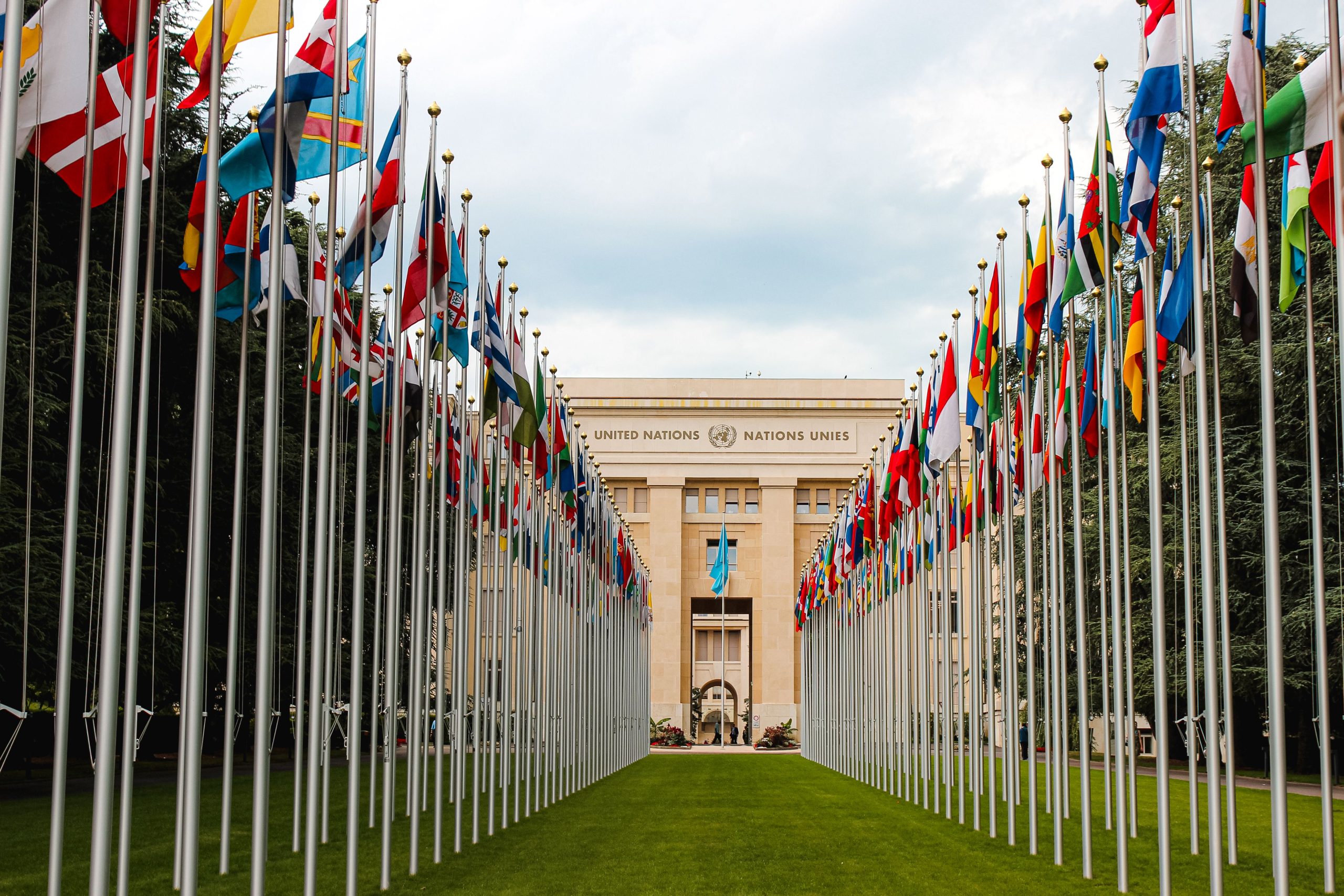
International relations are often discussed through diplomacy, security, and formal agreements. Their effects are also visible in ordinary economic and cultural activity: the goods available in a shop, the software a company can sell abroad, the students who can study in another country, and the films, music, food, and traditions that travel between communities.
The connection works in both directions. Political relationships influence the rules and level of confidence needed for exchange, while trade, travel, education, and cultural cooperation can create practical connections between societies. International relations are therefore not separate from exchange; they provide much of its operating environment.
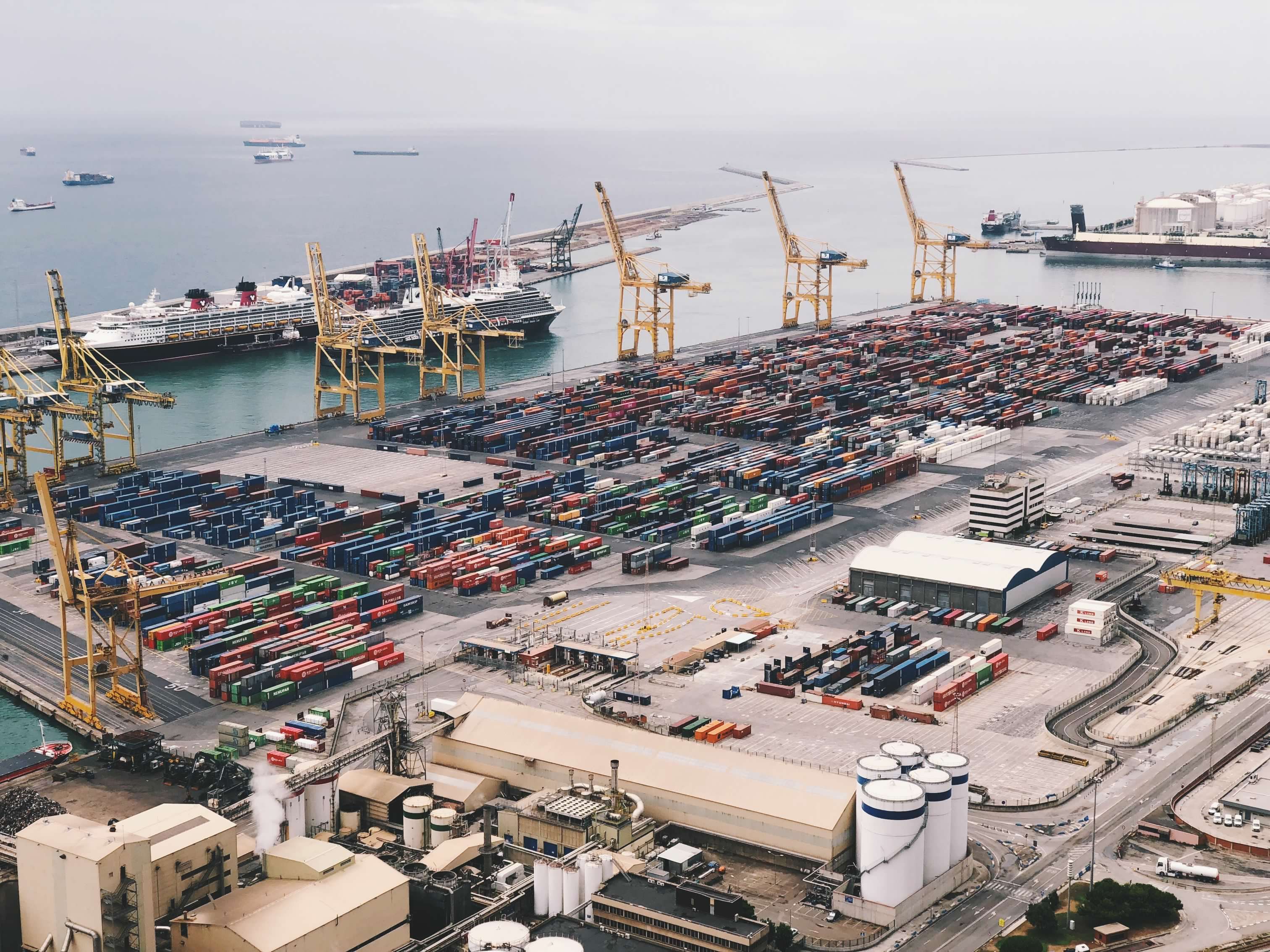
Diplomacy becomes economic infrastructure
Businesses can trade across borders only when several systems work together. Governments negotiate tariff schedules, customs procedures, investment rules, intellectual-property protections, transport arrangements, and standards. Diplomatic relationships help establish those systems and make them more predictable.
Predictability matters because international commerce usually involves decisions made months or years in advance. A manufacturer may need to source components from several economies; a service provider may need rules for handling data across borders; and an investor may need to understand how contracts will be recognized. Agreements cannot remove every commercial risk, but they can make the conditions of exchange clearer.
The World Trade Organization’s 2024 report on trade and inclusiveness describes this relationship in practical terms. It notes that trade can support growth and income convergence, while also emphasizing the importance of domestic policies covering education, labour, competition, and social protection. International rules create opportunities, but national institutions influence who can use them and how widely the gains are shared.
Trade relationships shape production, not just sales
Modern trade is rarely a simple exchange in which one country produces a finished product and another buys it. Components, raw materials, design, finance, software, logistics, and after-sales support may cross borders several times. This is the logic of global value chains.
The World Bank describes global value chains as accounting for almost half of global trade and links them to decades of economic convergence. The organization also identifies a condition for their continued usefulness: developing economies need stronger connectivity and productive capacity, while trading partners need open and predictable policies. International relations affect both sides of that equation.
Cooperative relationships can reduce delays at borders, improve access to inputs, and encourage companies to invest in production networks. They can also support knowledge transfer when firms work with suppliers, universities, and technical institutions in other economies. By contrast, uncertainty about market access or regulatory requirements may lead companies to delay investment or seek alternative suppliers.
These relationships are not only about lowering barriers. They also involve managing resilience. The Organisation for Economic Co-operation and Development reports that global value chains remained a central feature of the world economy in 2024, while warning that broad efforts to relocate supply chains could reduce trade and global output without necessarily making economies more stable. The policy challenge is to balance efficiency, diversification, and continuity rather than treating any single arrangement as universally best.
Services and digital exchange widen the relationship
International economic exchange now includes much more than physical cargo. Consulting, finance, education, tourism, engineering, entertainment, cloud computing, and digitally delivered products connect economies through services.
According to the World Trade Organization’s April 2025 Global Trade Outlook and Statistics, commercial services accounted for 26.4% of global trade in 2024 and reached a value of US$8.69 trillion. The figure illustrates why relations between governments increasingly include questions about professional qualifications, data governance, consumer protection, online security, and the movement of people.
Digital exchange can lower the cost of reaching a foreign market, especially for smaller firms and creative professionals. A designer can serve clients abroad without opening a local office, while a university can offer online courses to learners in other jurisdictions. Yet the benefits depend on compatible rules and infrastructure. Differences in privacy law, taxation, copyright, payments, and platform regulation can affect whether a service is available internationally.

Economic agreements can carry cultural consequences
Trade agreements influence culture because cultural goods and services are also economic products. Films, books, recordings, games, design, broadcasting, festivals, museums, and heritage-related tourism all depend on funding, distribution, intellectual property, and access to audiences.
At the same time, cultural activity has a role that cannot be measured only by sales. Language, history, identity, and social meaning travel with cultural expression. This is why many governments treat cultural policy as a distinct part of international cooperation rather than applying commercial rules without qualification.
The UNESCO Convention on the Protection and Promotion of the Diversity of Cultural Expressions recognizes both dimensions. It calls for conditions in which cultures can interact, supports international cooperation, and acknowledges the right of states to adopt measures that protect and promote cultural diversity. It also encourages co-production, co-distribution, professional exchanges, and support for cultural sectors in developing economies.
This approach explains why cultural exchange is not simply a one-way flow from larger markets to smaller ones. Public funding, translation, touring arrangements, visas, copyright rules, broadcasting policies, and partnerships can all affect which voices become visible internationally. Well-designed cooperation can make exchange more varied by helping creators reach audiences without requiring every cultural product to follow the same commercial formula.
People-to-people links make policy tangible
Formal relations become meaningful to the public through contact between people. Student exchanges, research partnerships, tourism, sister-city programmes, professional networks, artistic residencies, and sporting events allow individuals to develop familiarity with other societies.
Mobility is shaped by visas, transport links, recognition of qualifications, language support, public funding, and diplomatic confidence. A country may have strong demand for international education or cultural events, but restrictive procedures can still limit participation. Conversely, a targeted exchange programme can create connections that later support trade, research, and tourism.
Cultural contact also influences business. Understanding local communication styles, consumer expectations, etiquette, and historical context can reduce misunderstandings and help partnerships last. This does not mean cultures become interchangeable. Effective exchange usually depends on learning how differences matter.

Regional relationships show how exchange is layered
International relations operate at several levels at once. A country may participate in global institutions, regional agreements, bilateral partnerships, and city-to-city programmes. Each layer can address different practical needs: global rules may establish broad principles, regional arrangements may simplify movement, and local partnerships may turn those principles into educational or cultural projects.
For readers examining how these dynamics appear in East Asian affairs, additional regional context can complement the wider economic and cultural framework discussed here. The broader lesson is that regional relationships are not isolated from global exchange; they often determine how international rules are interpreted and applied in a particular place.
Cooperation works best when institutions connect
Economic and cultural exchange are sometimes handled by different ministries, agencies, and international organizations. In practice, the issues overlap. A film co-production may involve copyright, investment, work permits, taxation, and cultural policy. A technology partnership may involve trade rules, research cooperation, data transfers, and education. Treating these as entirely separate questions can leave important gaps.
International relations can help close those gaps through transparent rules, consultation, capacity-building, and mechanisms for resolving disagreements. They can also support inclusion by improving access for smaller firms, developing economies, independent creators, students, and communities whose work is less likely to travel through established commercial networks.
The strongest relationships are not defined only by the volume of goods exchanged. They are also measured by the reliability of the rules, the breadth of participation, and the ability of societies to maintain cultural confidence while engaging with others. Trade creates connections; diplomacy and cultural cooperation help determine what those connections become.
The long-term effect
International relations shape economic and cultural exchange through a chain of decisions: whether borders are predictable, whether contracts and creative rights are recognized, whether people can move, whether digital systems connect, and whether cultural diversity is treated as a public value as well as a commercial opportunity.
That chain explains why a change in diplomatic relations can eventually affect factory planning, online services, university enrolment, tourism, and the circulation of music or film. Exchange is not an automatic consequence of geography or technology. It is built and maintained through institutions, trust, and repeated cooperation.
When those foundations are broad and dependable, international relationships can support both economic opportunity and meaningful cultural contact. When they are narrow or uncertain, exchange may continue, but with higher costs and fewer participants. The quality of international relations therefore helps determine not only how much the world exchanges, but also how fairly and diversely that exchange takes place.