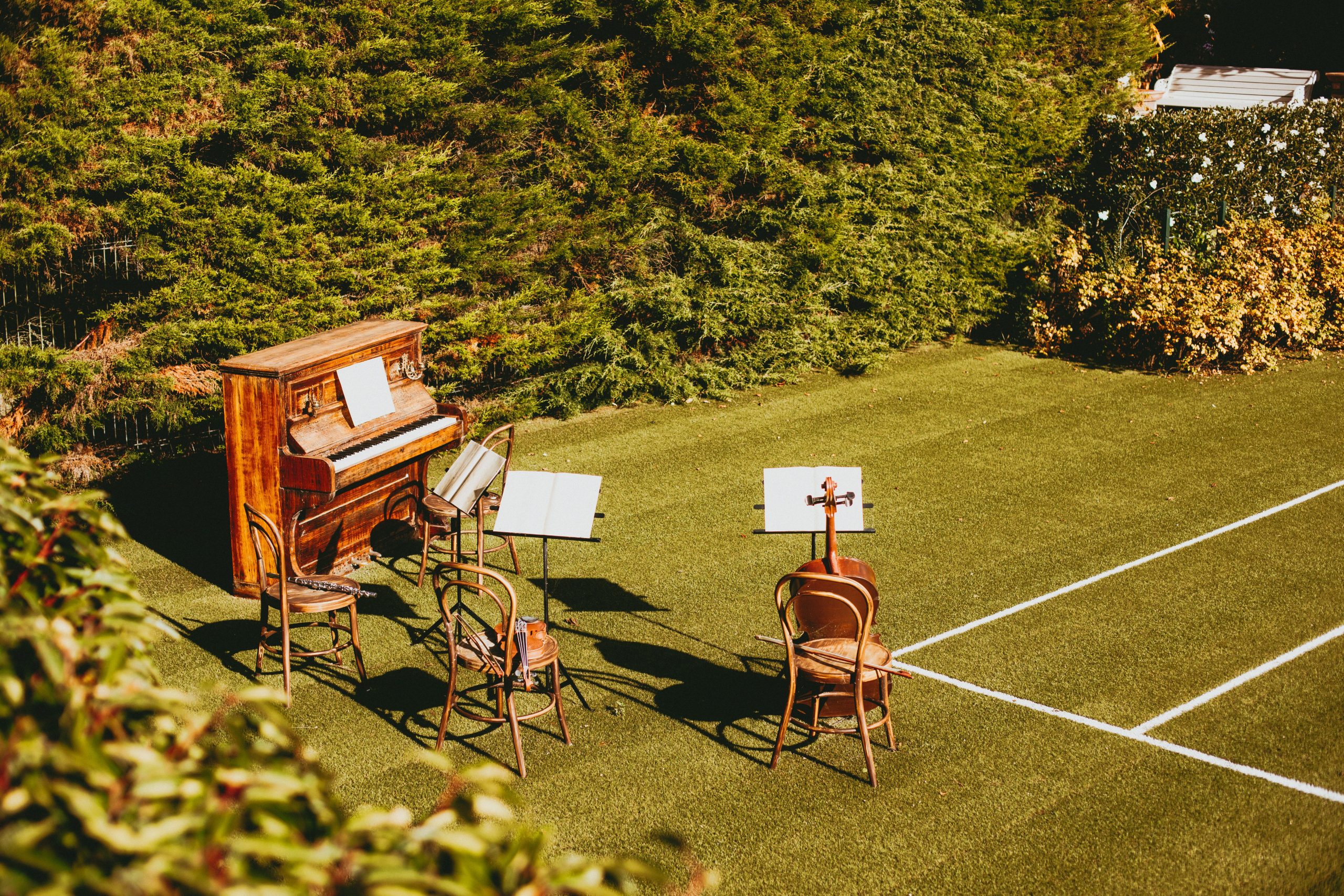
An outdoor music space has two jobs that are easy to confuse: it should make music enjoyable, and it should make people want to stay. The best garden stage is rarely the loudest or most elaborate one. It is the place where a guitarist can be heard clearly, guests can talk without shouting, and the setting still feels like a garden rather than a converted nightclub.
That balance starts with the boundary between the performance area and the rest of the property. A sturdy edge, terrace rail, or set of composite balustrades can help define the space visually, but it should not be treated as acoustic insulation. Sound absorption, soundproofing, and physical separation are different design problems.
Contents
- Start with the kind of listening you want
- Choose the site before buying equipment
- Use the garden to shape, not trap, sound
- Build a layout that works for performers and listeners
- Select equipment for clarity at modest volume
- Design the atmosphere around the music
- Plan power, weather, and neighbor comfort
- A practical planning checklist
- Frequently asked questions
Start with the kind of listening you want
Before choosing decking, speakers, or lighting, decide whether the space is primarily for one of three situations:
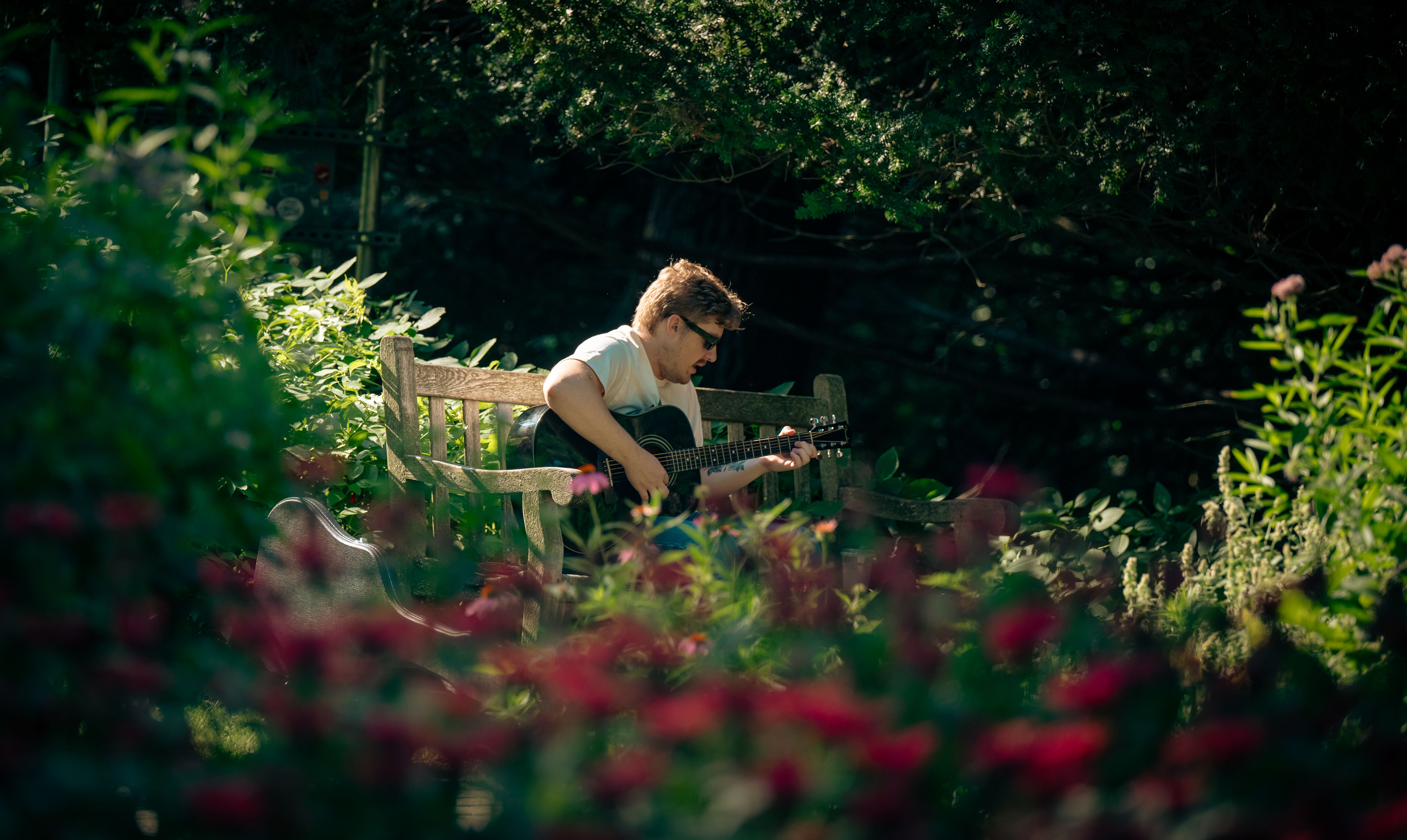
- Quiet acoustic playing for a few people.
- Small amplified performances, such as a singer-songwriter set.
- Social gatherings where music supports conversation rather than becoming the main event.
These uses overlap, but they do not require the same layout. A close semicircle around an acoustic performer can feel intimate and natural. A small PA system needs more distance between the speakers and the nearest listener. A party-friendly arrangement needs a lower-volume zone where people can speak comfortably.
My strong preference is to design for the quietest realistic use first, then add modest amplification. If the space only works when the system is turned up, the underlying layout is probably fighting the music.
Choose the site before buying equipment
Distance is the first outdoor acoustic tool. Berklee Online describes outdoor sound as a free-field situation in which distance is the most important part of the path between source and listener. In practical terms, moving the performance area a few metres away from a bedroom window, property boundary, or reflective wall may do more than adding another speaker.
Walk the garden at the time you expect to use it. Listen for traffic, ventilation units, pool pumps, barking dogs, and the general noise floor. A space that feels peaceful at midday may be surprisingly exposed after sunset when background activity drops.
Look for a position that provides:
- A clear line of sight from the performer to the main seating area.
- Enough room behind the performer for access, cables, and a weather fallback.
- Some distance from hard walls, glass doors, and narrow corners.
- Stable, level footing for chairs, stands, instruments, and temporary flooring.
- A route for power that does not cross the main walking path.
Do not assume a wall is automatically helpful. A large, flat surface can reflect sound back toward the player or audience. It may provide visual enclosure, but acoustically it can create a bright, distracting slap or make a small PA sound harsher than expected.
Use the garden to shape, not trap, sound
Outdoor spaces generally have less reverberation than rooms, because sound energy disperses rather than repeatedly bouncing between a ceiling and four walls. The World Health Organization’s guidance on sound distribution at music venues notes that outdoor design is mainly concerned with coverage, reflections from large objects, weather effects, and sound at noise-sensitive locations.
That does not mean the garden has no acoustics. Paving, masonry, a canopy, a boundary wall, and even the underside of a solid roof can create early reflections. Some reflections add warmth; late or concentrated reflections reduce clarity.
| Feature | Potential benefit | Risk to manage | Practical response |
|---|---|---|---|
| Planting and uneven foliage | Breaks up sightlines and softens the visual setting | Does not reliably block low-frequency sound | Use it for atmosphere and modest high-frequency scattering, not as a soundproof wall |
| Large masonry or glass wall | Can provide a clear backdrop and reflected support for quiet acoustic music | Strong reflections and audible slap | Angle the performer or speaker away from it; add movable fabric or soft furnishings where appropriate |
| Covered canopy | Improves weather comfort and can help the performer hear | Hard overhead surfaces may reflect sound toward the stage | Prefer a canopy with a treated or textile underside and avoid enclosing every side |
| Soft seating, rugs, and curtains | Absorb some mid and high-frequency reflections | Outdoor fabrics and rugs need to dry fully | Use removable pieces that can be stored after the performance |
Source note: The acoustic principles in this table are based on Berklee Online’s explanation of outdoor reflection, absorption, diffusion, and barriers, and the WHO/ITU guidance on outdoor venue acoustics, accessed in October 2026.
It is important not to mistake absorption for soundproofing. A curtain can reduce reflections inside the listening area, but it will not stop bass from reaching a neighbor. For a residential garden, placement, volume, operating hours, and speaker direction usually matter more than decorative acoustic products.
Build a layout that works for performers and listeners
For a solo acoustic set, begin with a shallow semicircle rather than a straight row. This lets listeners see the performer’s hands and face, keeps conversation slightly to the sides, and avoids placing half the audience directly behind one another.
For a small amplified performance, separate the main speakers from the performer when possible. The ITU’s 2024 venue guidance recommends aiming speakers toward the intended audience, avoiding large differences in distance between listeners and speakers, and creating quieter areas where people can circulate or talk. Those principles scale down well to a patio.
A flexible arrangement might include:
- A defined performance footprint of roughly the width of the instrument setup, plus room to step away from stands and cables.
- A primary listening arc close enough for detail but not so close that the front row dominates the mix.
- A side seating area with lower direct sound for conversation.
- An equipment edge where a mixer, water, music stands, and instrument cases can sit without becoming trip hazards.
- A clear route to shelter if wind or rain arrives.
Keep the performer slightly away from a hard rear wall. That gives the player a cleaner sense of the direct sound and reduces the chance that a wall reflection competes with the instrument or vocal microphone.
Select equipment for clarity at modest volume
Small spaces are often damaged by too much equipment. A compact, well-placed system is usually more relaxing than a powerful system used at the bottom of its range.
For acoustic instruments and spoken introductions, prioritize:
- A microphone suited to the voice or instrument rather than a generic all-purpose model.
- Speakers with controlled direction, positioned above seated head height where practical.
- A mixer that allows the vocal, instrument, and background music to be balanced separately.
- A simple monitor arrangement that lets the performer hear enough without sending unnecessary volume toward the audience.
- A soundcheck from several seats, not only from beside the mixer.
Outdoor sound changes with wind, temperature, humidity, and distance. The WHO guidance specifically notes that weather can influence propagation, particularly toward neighboring properties. A setup that seems quiet during a still afternoon may carry farther later in the evening. Build in a volume check after the audience arrives rather than relying only on an empty-space soundcheck.
Hearing comfort belongs in the design too. The ITU guidance recommends sound-level management, monitoring, and quieter areas at music events. For a private garden, that can be as simple as keeping the rear seating and refreshment area away from the loudspeaker axis and treating conversation as a design requirement rather than an afterthought.
Design the atmosphere around the music
Relaxation comes from several small decisions working together. Lighting should help people read faces and move safely without shining directly into the performer or audience. Warm, indirect light is usually more forgiving than a bright spotlight, especially when the music is acoustic.
Use layers rather than one dominant lighting source:
- Low-level path lighting for feet and steps.
- Soft ambient lighting around the seating perimeter.
- A restrained performance light aimed at the player.
- Optional table or lantern lighting that can be reduced once the music starts.
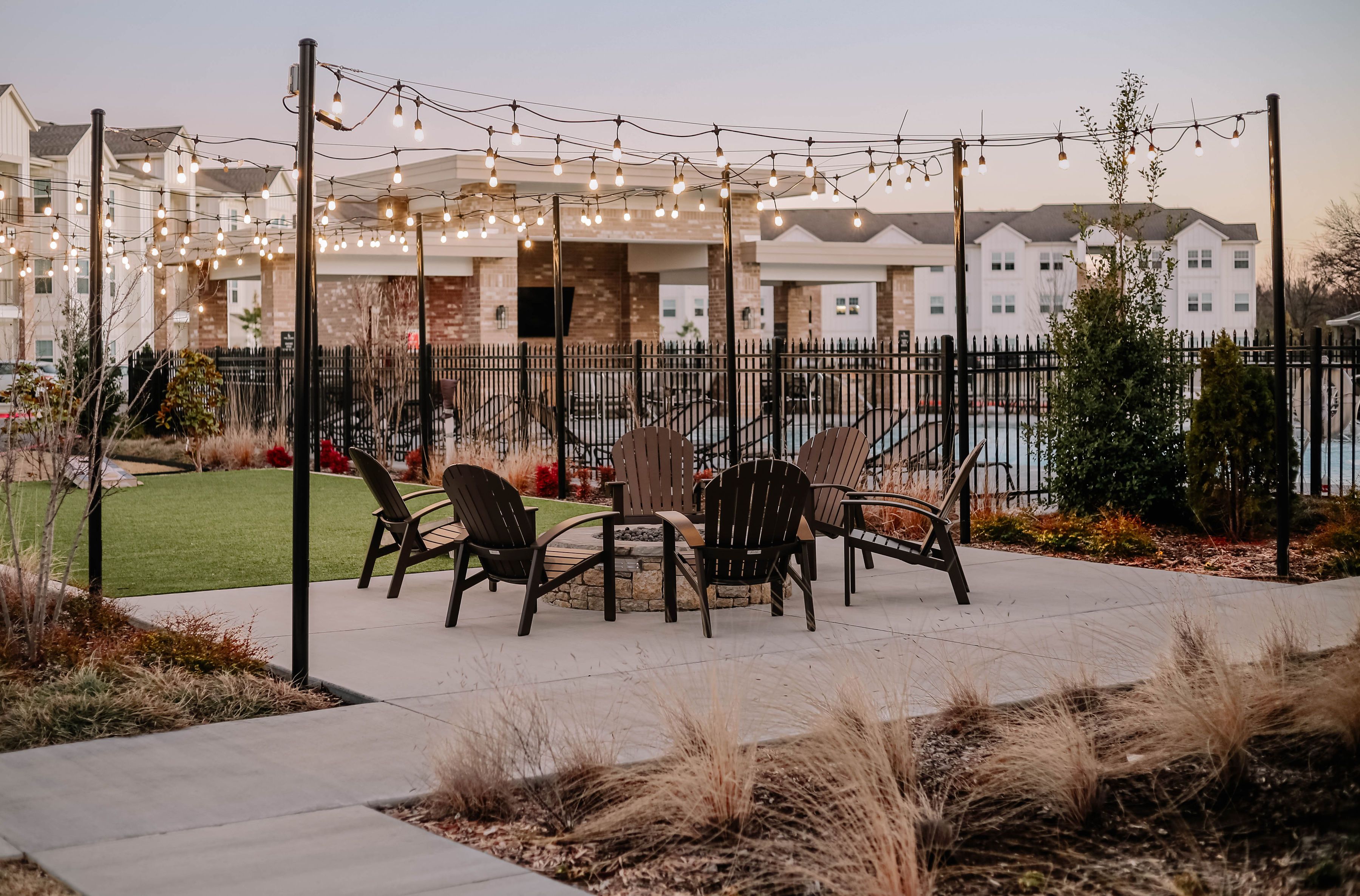
Furniture should support the length of the event. A mix of upright chairs, benches, and a few informal seats works better than a single type of outdoor furniture. Leave enough space for people to enter and leave without walking directly in front of the performer.
Planting can frame the stage, but avoid dense leaves brushing against microphones or blocking the sound path. The goal is not to create a sealed acoustic enclosure. It is to make the listener feel held by the landscape while keeping the sound open.

Plan power, weather, and neighbor comfort
Outdoor music combines electricity, people, cables, drinks, and changing weather. Treat the power plan as part of the design, not as something to solve with a last-minute extension lead.
The UK’s Health and Safety Executive advises entertainers to use residual-current protection, check equipment before use, avoid incompatible connections, and never remove protective earth connections to cure mains hum. Its guidance also distinguishes outdoor-rated connectors from indoor types. Local electrical rules differ, so fixed outlets and temporary event supplies should be checked by a suitably competent electrician.
At minimum:
- Use equipment and connectors rated for the conditions in which they will be used.
- Keep power distribution and connections protected from rain, irrigation, and drink spills.
- Run cables along edges and cover or secure them where people cross.
- Keep amplifiers, power strips, and mixers off damp ground.
- Stop the performance if water reaches electrical equipment or wind makes stands unstable.
- Store instruments and electronics indoors when the space is not in use.
Neighbor comfort is not only a courtesy; it is part of good sound design. Point speakers into the listening area rather than toward boundaries, keep subwoofer output conservative, and agree on an end time before the first guest arrives. If the music must be loud to feel exciting, the space is probably better suited to headphones or an indoor venue than a residential garden.
A practical planning checklist
Use this sequence before committing to permanent construction:
- Mark the likely performer position and the nearest noise-sensitive windows or boundaries.
- Test the view and sound from the intended seating arc.
- Place temporary chairs, a small speaker pair, and lighting before buying built-in features.
- Listen for reflections from walls, glass, paving, and a canopy.
- Create one lower-volume seating zone.
- Map every cable and walking route.
- Check the weather fallback and storage location for instruments and electronics.
- Run a short event with a deliberately modest volume before expanding the system.
Frequently Asked Questions
How large should an outdoor music area be?
There is no useful single minimum size. Plan around the performer, equipment, circulation, and the number of seats, then leave a clear route to shelter. For a small acoustic performance, visual closeness matters more than a large stage.
Do plants make an outdoor music space quieter?
Plants can soften the appearance of a space and scatter some higher-frequency reflections, but they are not a dependable soundproofing barrier. Distance, speaker direction, volume, and solid boundary design have a greater effect on sound reaching neighboring properties.
Should speakers face the performer or the audience?
Main speakers should generally face the intended audience, not a wall, boundary, or the performer. The performer may need a separate monitor or carefully positioned reference speaker so the main system does not have to be turned up unnecessarily.
Can a canopy improve the sound?
A canopy can improve comfort and provide some useful support for an acoustic performer, but a hard, low ceiling may create strong reflections. Choose a design that provides shelter without enclosing the space on every side, and test the sound from the audience seats.
What is the safest way to power outdoor music equipment?
Use properly rated outdoor equipment and connections, residual-current protection where required, protected cable routes, and dry, stable locations for power distribution. Fixed electrical work and temporary supplies should be assessed by a competent professional under the rules that apply in your location.
Let the garden stay audible
The most successful outdoor music spaces do not try to overpower the surroundings. They give the music a clear place to begin, give listeners more than one way to experience it, and leave enough quiet around the performance for birds, conversation, weather, and ordinary life to remain part of the evening.
That is the real test: when the last chord fades, the space should still feel like somewhere you would happily sit tomorrow.