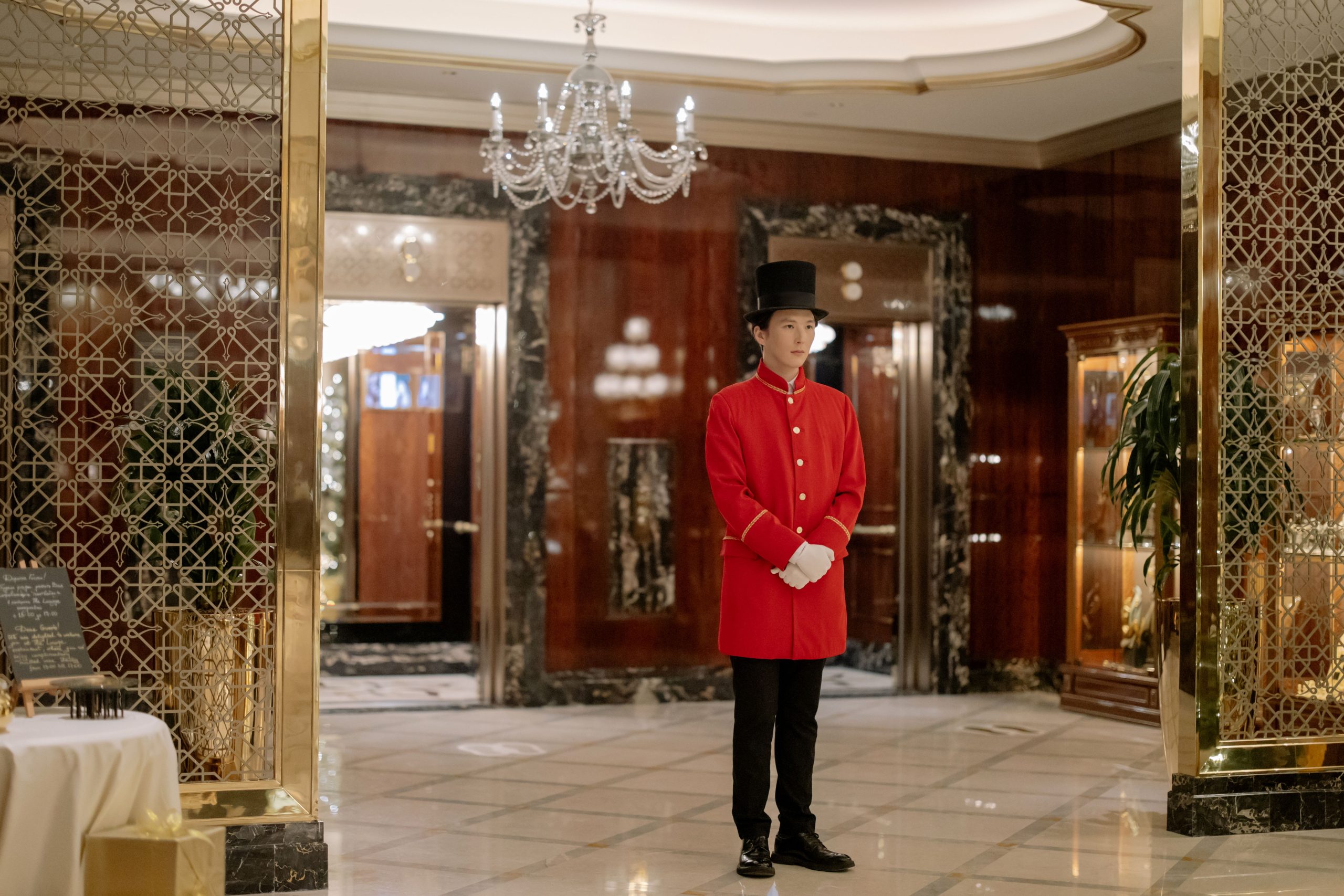
Most businesses treat the first impression as an accident – something that happens while they are busy doing the real work. Luxury hospitality treats it as the real work. The Ritz-Carlton built its service philosophy on a finding that emerged when co-founder Horst Schulze worked through roughly 400,000 guest comment cards: when the opening contact was excellent, a complaint almost never followed. When it was cold, one almost always did.

Your brain decides in a tenth of a second
The obsession has solid science behind it. In a 2006 study in Psychological Science, Janine Willis and Alexander Todorov found that judgments of trustworthiness made after a 100-millisecond glimpse of a face matched judgments made with no time limit – extra time mostly just inflated the judges’ confidence. The catch is that these lightning inferences are often inaccurate. So the lesson is not “perform warmth.” It is that whatever you genuinely broadcast in the opening seconds becomes the frame against which every later moment is read.
What the Gold Standards actually codify
Ritz-Carlton’s genius was turning that insight into procedure. Its Gold Standards are public – the motto “Ladies and Gentlemen serving Ladies and Gentlemen,” and the famous three steps of service: a warm, sincere greeting that uses the guest’s name, anticipation of needs, and a fond farewell that uses it again. Properties hold a short daily line-up where staff rehearse a service value rather than just read it, and frontline employees carry roughly US$2,000 of discretion to resolve a problem on the spot – backed by around 250 hours of training a year.

Where the product is a person
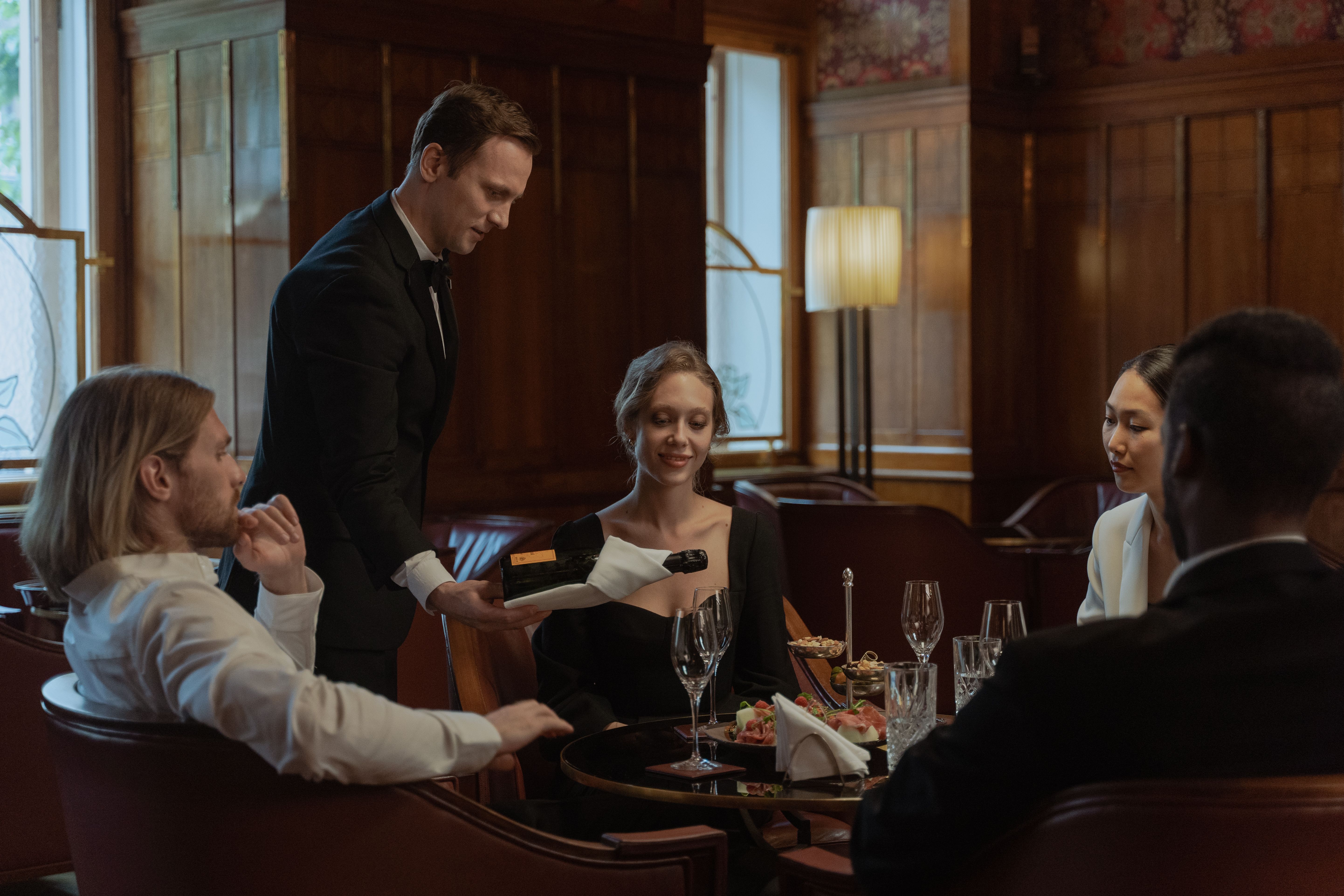
There is a corner of luxury where all of this stops being abstract, because the product is a person. Elite companionship is the purest example: the guest is judging not a room or a plate but another human being, inside the same 100-millisecond window everyone else gets. Spend time on the site of a well-run München escort and you will spot the same grammar of reassurance – punctuality promised, discretion guaranteed, the tone set before the first meeting ever takes place. Elegance is choreographed so the other person never has to ask.
What you can steal
You do not need marble or a staff to borrow any of this. Three habits transfer to almost any profession:
- Engineer the first ten seconds. For a hotel that is the doorman’s greeting; for you it is your reply time, your photo, the first line of your email. Your guest has judged them before you speak.
- Bookend the encounter. The farewell is half the memory, which is why Ritz repeats your name at the door. Endings are what people replay.
- Spend on recovery, not decoration. That US$2,000 fund was almost never spent in full – most complaints died from one sincere offer to fix a breakfast. “Let me fix that” out-earns any apology.
None of this works if the intent behind it is fake – and the research suggests guests can tell almost instantly, because they decide almost instantly. That is the genuine luxury lesson: polish is meaningless without care, but care without consistency evaporates. Standards do not replace warmth; they make it repeatable. And repeatability, more than thread count or star ratings, is what brings people back.